St. Louis-Style Frozen Custard: What It Is and How to Make It at Home
October 11, 2026 - Frozen Custard
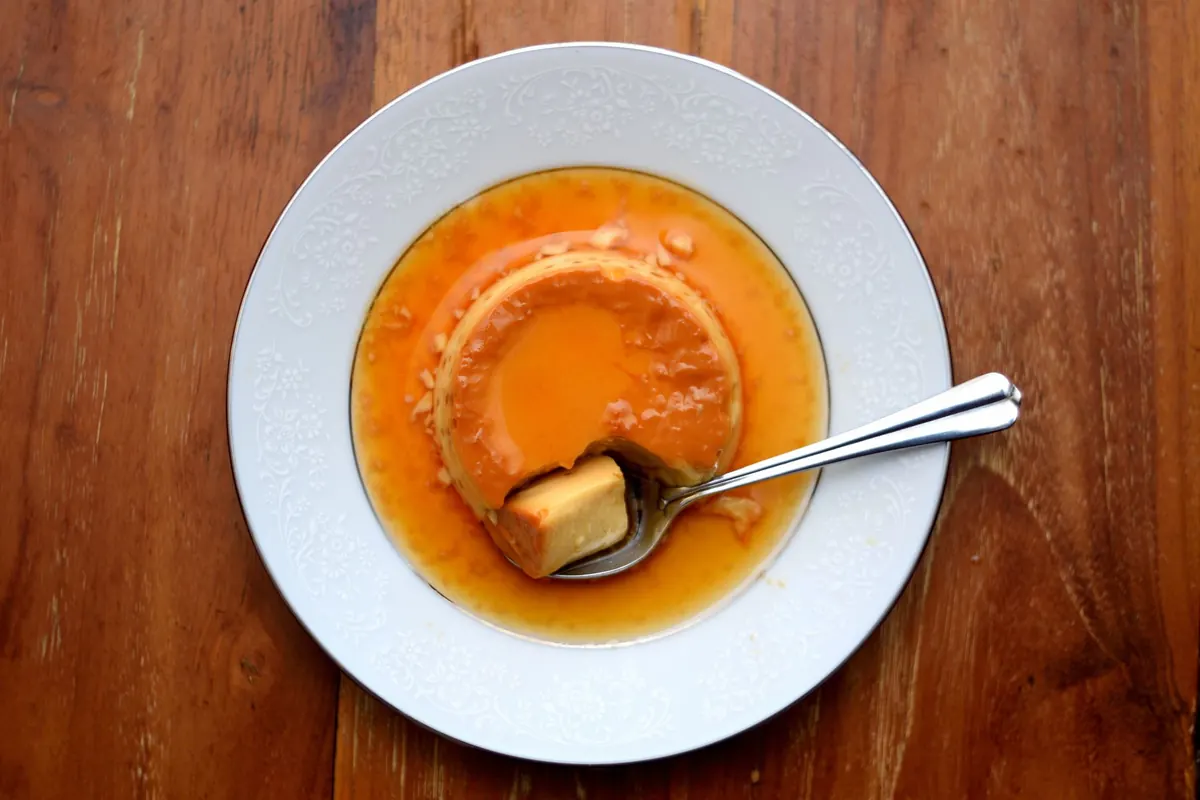
A baked custard gives you almost no warning. The edges firm up first, the top browns, and the middle still moves like something alive. Pull it too early and you get a puddle. Leave it two minutes too long and you get rubber sitting in a moat of its own weep. The window between those outcomes is narrow, but it isn't invisible — you just have to know what to look for.
Two cues do most of the work. The jiggle test tells you how the whole custard is moving. An internal temperature reading tells you what the egg proteins are actually doing. Use them together and you'll land on a silky, sliceable set far more often than you miss.
Egg proteins unfold and link together as they heat, turning a mixture of dairy, sugar and eggs into a soft gel. That linking doesn't happen all at once, and it doesn't stop politely when the custard is "done." It keeps tightening. Push the temperature a few degrees beyond the ideal range and the proteins squeeze out the liquid they were holding, which is why an overbaked custard weeps and tastes grainy.
Your oven makes this harder than it needs to be. Most home ovens cycle above and below the set temperature by 25°F or more, and a recipe's bake time was written on someone else's oven. A water bath helps by buffering the heat, but it can't fix a dial that's off by 30 degrees. That's the real reason to stop trusting the clock and start reading the custard itself.
One more thing to keep in mind: carryover cooking. A custard keeps rising in temperature after it leaves the oven, often by another 3 to 5 degrees. If you wait until the center hits your target number in the oven, it will overshoot on the counter.
This is the cue you'll use most, especially for crème brûlée, pots de crème, custard pie and anything baked in a water bath. What you're looking for is a center that moves like firm gelatin — as one unit, with a slight tremor that stays in the middle and doesn't travel.
Here's how to read it:
Signs you've gone too far: a domed top, cracks radiating from the center, bubbling at the edges of the pan, or liquid visible around the rim. Once those appear, the custard will still be edible, but it won't be smooth.
Older recipes often tell you to insert a knife an inch from the center and pull it out clean. It works, but it's a blunt instrument. The slit you leave behind can weep as the custard cools, and a knife that comes out completely dry can mean you've baked past the point you wanted. If you use it, insert the blade an inch from the center rather than dead center — the middle is always the last part to set — and treat a slightly coated blade as a good sign, not a failure.
An instant-read thermometer removes the guesswork. Most baked custards are ready somewhere between 170°F and 175°F (77°C to 79°C). Pull them at the lower end of that range and let carryover do the rest. Very soft, spoonable custards like pots de crème can come out closer to 165°F if you're serving them in the dish and chilling them well.
Different custards have different targets. A thin custard pie in a shallow plate will read a few degrees warmer than a deep ramekin at the same moment of doneness, and denser fillings like cheesecake-style custards set at lower temperatures, often 150°F to 160°F. When in doubt, follow the temperature the recipe gives you rather than a general rule.
Depth matters more than width. A shallow dish exposes more surface area and sets faster, while a deep ramekin can take half again as long. Glass heats slowly and holds heat; dark metal pans push heat in faster and can brown the edges before the middle is anywhere near set.
The water bath is your friend here. It keeps the custard's outer edges from climbing past the curdling point while the center catches up, which widens the doneness window considerably. If you're skipping the bath, lower the oven temperature by 25°F and expect to test more often. Ratios matter too: a formula heavy on yolks sets softer and more slowly than one with whole eggs, and extra sugar or cream adds richness that also slows the set.
An underbaked custard is easy to rescue. Slide it back into its water bath and return it to the oven for five-minute stretches, testing each time. If it's only slightly looser than you'd like but already reads 170°F, don't put it back — just chill it. Custards firm up noticeably in the refrigerator, and a custard pie or crème brûlée that looked trembly at the oven door is often perfect the next day. Plan on at least four hours of chilling, or overnight.
An overbaked custard can't be un-curdled, but it isn't wasted. Strain it through a fine sieve to smooth out the grain, or blend it until it's uniform and use it as a sauce, an ice cream base or a filling for a trifle where texture is less on display. Don't serve it plain and hope nobody notices.
Next time you bake a custard, work in this order. Set your oven and water bath first, and let the water come to temperature before the pan goes in. Note the temperature target, not just the bake time. Set a timer for five minutes before the short end of the range. At that first check, do the jiggle test — if the center moves as one soft piece, take the temperature. If it reads 170°F to 175°F, pull it out and let it sit in the water bath for ten minutes before moving it to a rack. Then chill it thoroughly before you cut or torch it.
Do that a few times and you'll stop needing the numbers altogether. You'll see the wobble, recognize it, and know.
Photo: Ayub Abdul Rahman / Pexels
St. Louis-style frozen custard is denser, richer and silkier than ice cream. Here is what defines it and how to make...
A season-by-season custard calendar: rhubarb in spring, sweet corn and stone fruit in summer, pumpkin and maple in...
Copyright © 2026 Custard Desk. All Right Reserved.